

Skin Rejuvenation Plans at Simply Dermatology

Most people who come in for a cosmetic consultation are not concerned about just one thing. They may notice brown spots across the cheeks, redness around the nose, a rougher texture, fine lines, or changes in firmness and facial volume. Our signature layered approach allows us to look at those concerns together and create a plan that addresses each one appropriately.
This does not mean doing every procedure on the same day. It means understanding what is creating each visible change and deciding which treatments may work well together, how they should be ordered, and how much time the skin needs between them.
At Simply Dermatology, our layered approach is designed to help you look naturally refreshed. Instead of expecting one device or injectable to correct everything, we build a treatment plan around the different aspects of the skin and face that you would like to improve.
What is a layered skin rejuvenation plan?
A layered skin rejuvenation plan uses complementary treatments to address different aspects of the skin and face.
Some treatments improve tone and texture. Others target redness, stimulate collagen, soften expression lines, restore support, or improve facial contours. When several concerns overlap, choosing one treatment and expecting it to do everything may leave part of the picture unaddressed.
For example, Fraxel may improve sun damage and rough texture, but it will not replace Botox for lines caused by muscle movement. Ultherapy Prime may improve firmness, but it is not designed to remove brown spots. Filler may restore facial support, but it will not correct redness or uneven skin tone.
A layered plan connects these pieces without losing sight of the overall result.
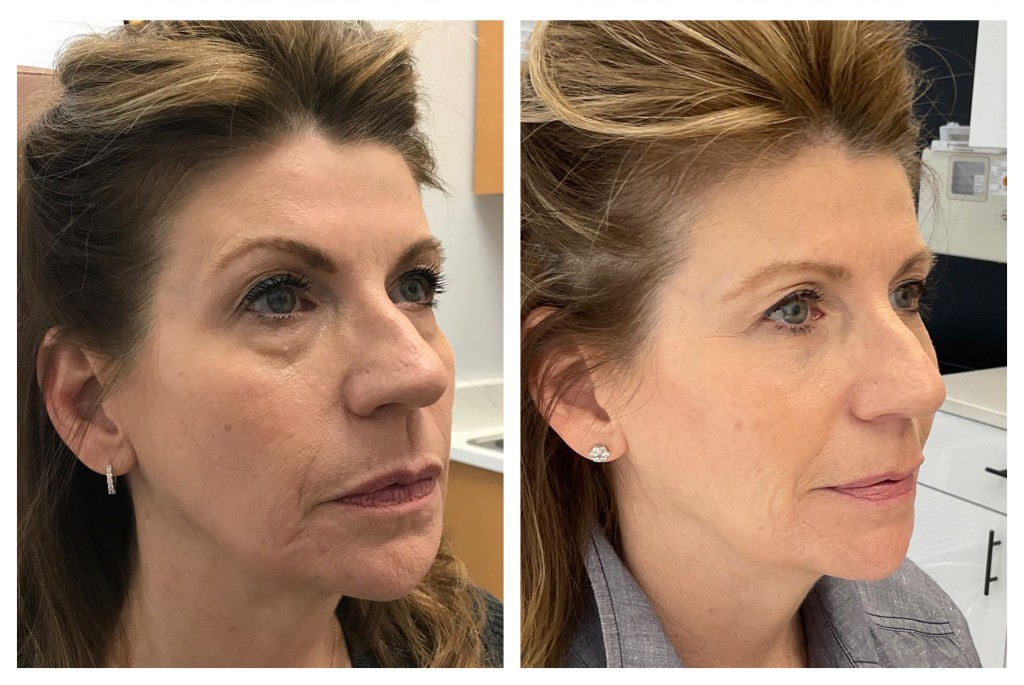
Why one treatment may not address everything
Facial aging and sun damage occur at several levels. Some changes are visible at the skin’s surface, while others involve deeper collagen, muscle movement, facial fat, or underlying structural support.
Common concerns may include:
- Brown spots caused by excess pigment
- Redness or visible blood vessels
- Rough or uneven texture
- Fine lines and wrinkles
- Acne scars
- Loss of firmness
- Expression lines
- Facial volume loss
These concerns often overlap, but they are not interchangeable. Fraxel may improve pigmentation and texture, for example, but it does not replace Botox for expression lines or filler for volume loss. Ultherapy Prime may help improve firmness, but it is not intended to remove brown spots or visible facial vessels.
A thoughtful plan begins by separating the concerns rather than treating them as one general sign of aging.
How do we decide what to address first?
The order of treatment matters.
Sometimes the concern with the greatest visual impact is the best place to begin. In other cases, one treatment may need to come first because it affects the timing, healing, or results of the next step.
We also consider what is most practical. If you have a wedding, vacation, or work event coming up, a treatment with several days of visible recovery may need to wait. If your skin has been recently tanned, certain laser or light-based treatments may need to be postponed. If collagen stimulation is part of the plan, we may begin early because results continue developing over several months.
The first treatment is not always the one that addresses every or even the biggest concern. It creates a sensible starting point for the rest of the plan.
Why treatments are often staged
A layered plan usually unfolds over time. Spacing treatments out gives the skin an opportunity to heal and allows us to see how much improvement occurred before deciding what is still needed. It can also make the overall process easier to manage by preventing several recovery periods from overlapping. By not changing anything drastically, we can make sure you still look like yourself at every step of the way.
Different treatments work on different timelines. Botox begins taking effect within several days and reaches its full result at approximately two weeks. Fraxel is commonly performed as a series, with improvement building across treatments. Ultherapy Prime stimulates collagen gradually, with results continuing to develop over approximately three to six months.
Staging also gives us the flexibility to adjust. If one treatment creates more improvement than expected, the next step may be modified. If a particular concern becomes more noticeable after another has improved, the plan can shift accordingly.
What might a layered treatment plan look like?
There is no universal combination that everyone receives. The following examples show how a plan may come together based on the concerns being treated.
Sun damage, redness, and rough texture
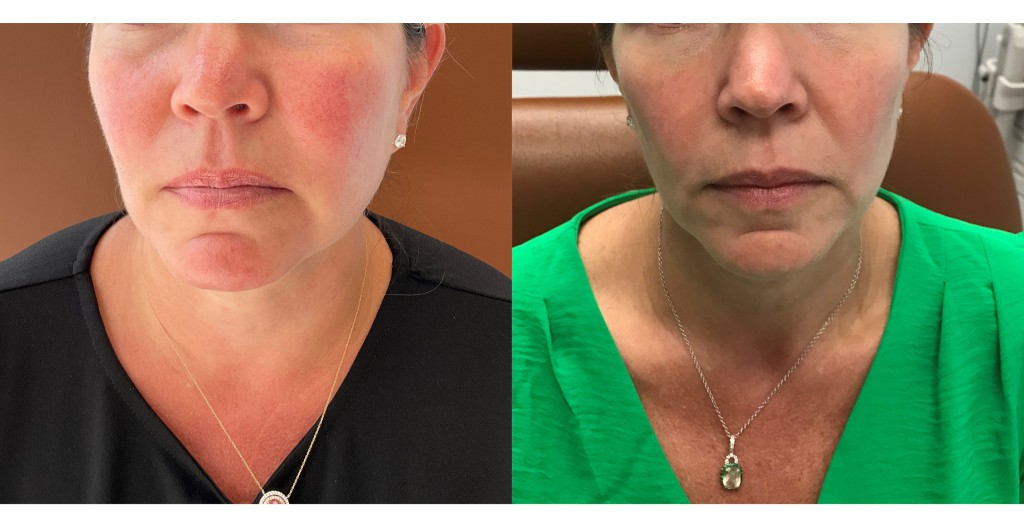
Scattered brown spots, redness around the nose, and rougher texture across the cheeks may require more than one type of treatment.
The plan might begin with Fraxel if pigmentation and texture are the dominant concerns. VBeam could then be considered for visible facial vessels that remain. If brown discoloration and redness are both spread more diffusely, IPL Photofacial may be a more appropriate starting point.
Uneven texture and loss of firmness
When rough texture and skin laxity appear together, one treatment may be selected for the skin’s surface while another addresses deeper collagen and support.
Fraxel or Micro RF may be considered for texture, depending on the concern. Ultherapy Prime may be incorporated when deeper lifting and firmness are also priorities.

These treatments do not compete with one another. They work at different levels within the same plan.
Expression lines, skin quality, and facial volume
A refreshed appearance often depends on more than softening one line.
Each treatment has a separate role. The goal is to bring those changes into balance so the result looks natural rather than focused on one isolated feature.
Botox may be used for lines caused by repeated facial movement. A resurfacing treatment may improve tone, texture, or fine lines within the skin itself. Carefully placed filler may restore support in an area affected by volume loss.
Brown spots and visible blood vessels
When isolated brown spots and visible facial vessels appear in the same area, Q-Switch and VBeam may be used at different points in the plan.
If the discoloration is more widespread and includes both brown and red tones, IPL Photofacial may be considered instead. Skin tone, recent sun exposure, and the exact pattern of discoloration all influence that decision.
More advanced texture changes or scarring
When acne scars, deeper wrinkles, or more significant texture changes are the primary concern, the plan may include Fraxel, fractional CO2, Micro RF, or a sequence of treatments.
The appropriate choice depends on the depth of the concern, the condition of the skin, and the amount of recovery that can be accommodated. Our Fraxel vs. CO2 laser guide provides a closer look at two of these resurfacing options.
Can layered treatments be performed at the same appointment?
Some treatments can be combined safely during one visit, while others are better separated.
The answer depends on the procedures being considered, the treatment areas, the intensity of the settings, and how much recovery is expected. Combining treatments is not automatically more efficient if it creates unnecessary irritation or makes aftercare more difficult.
We may recommend separate appointments when:
- The skin needs time to heal between procedures
- One treatment may affect how the skin responds to another
- The treatments create different aftercare requirements
- Results from the first treatment should be evaluated before proceeding
- Spacing the appointments makes downtime easier to manage
How long does a complete skin rejuvenation plan take?
The timeline depends on what the plan includes. Some changes, such as the effect of Botox, become visible relatively quickly. Other treatments work more gradually because the skin needs time to heal, renew, or produce collagen. A series of Fraxel, Clear + Brilliant, or Micro RF treatments may extend across several months. Ultherapy Prime results continue developing over approximately three to six months.
If multiple concerns are being addressed, the full plan may unfold over a season or longer. That does not mean you have to wait until the end to see improvement. Results can appear at different stages as each part of the plan takes effect.
We also consider maintenance. Some treatments may be repeated periodically, while others are scheduled only when the skin or facial structure begins to change again.

Where does skincare fit into the plan?
Skincare cannot replace every in-office treatment, but it plays an important supporting role.
A consistent routine can help maintain the skin barrier, protect against additional sun damage, and support the improvements achieved with procedures. Daily broad-spectrum sunscreen is especially important before and after laser, light-based, and resurfacing treatments.
Products may also be adjusted around a procedure. Certain active ingredients may need to be paused, while hydration and barrier support may become the priority during recovery.
Some products we may recommend are Simply Serum® CE + Ferulic for daytime antioxidant support, Simply Serum® Hyaluronic + B5 for hydration, or Simply Cream® and Simply Oil® Facial Oil to support moisture and the skin barrier.
What we consider during a cosmetic consultation
When creating a skin rejuvenation plan, the Simply Dermatology team considers:
- Your main concerns and priorities
- The cause and depth of each concern
- Skin tone and pigmentation history
- History of melasma or post-inflammatory hyperpigmentation
- Skin sensitivity
- Medical history and current medications
- Previous treatments and how your skin responded
- Current skincare routine
- Recent tanning or sun exposure
- Desired degree of improvement
- Available downtime
- Upcoming travel or special events
- How each treatment fits into the overall sequence
This physician-led evaluation helps us create a plan that is appropriate for your skin and realistic for your life.
Our signature layered approach to looking naturally refreshed
Sometimes one treatment is enough. When several concerns overlap, our signature layered approach allows us to address them in a coordinated way without losing sight of the overall result.
At Simply Dermatology, the goal is to help you look refreshed, balanced, and natural. Your plan should enhance your appearance without making you look overdone or unlike yourself.
To schedule a cosmetic consultation at our Melville office, call 631-377-7241.
-Dr. Papantoniou
Other blogs you might like to check out: Why Fall is the Best Time to Start Laser Treatments and Which Dermal Filler is Best?