
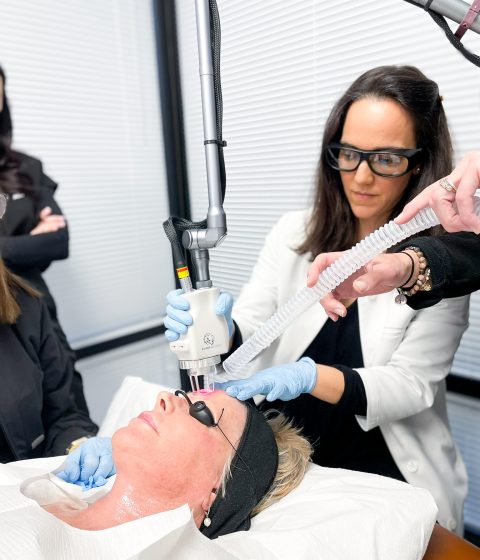
Laser Treatments in the Fall
After months of sunshine, outdoor activities, and time spent at the beach, you may notice that your skin looks a little different than it did at the beginning of summer. Brown spots may appear darker, redness may be more noticeable, and your complexion may feel rougher or less even.
Fall is when many patients begin thinking about correcting that visible summer damage. It is also one of the most convenient times to begin laser treatments because reduced sun exposure can make treatment planning and aftercare easier.
Here is why many patients choose to begin laser treatments in the fall and how we determine which option is right for their skin.
Why are laser treatments in the fall so popular?
Many laser and light-based treatments work by targeting pigment, blood vessels, water, or specific layers of the skin. Depending on the treatment, your skin may be temporarily more sensitive to sunlight while it heals.
Sun protection before and after treatment is vital to getting the results you want. This can be more difficult during the summer, when vacations, beach days, outdoor events, and incidental sun exposure are more common. As fall begins and people spend less time in direct sunlight, it may become easier to follow the recommended aftercare.
Of course, laser treatments can be performed at other times of the year. Fall is simply a practical time for many patients to begin, especially if they want to address concerns that became more noticeable over the summer.
What happens to your skin during the summer?
Even when you wear sunscreen, cumulative sun exposure can affect the appearance of your skin. By the end of summer, you may notice:
- Brown spots or uneven pigmentation
- Persistent redness
- Visible facial blood vessels
- Dull or uneven skin tone
- Rough texture
- Fine lines
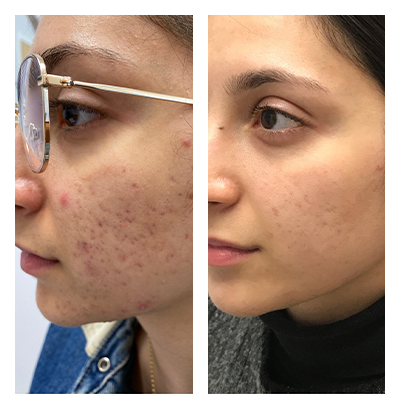
- More noticeable acne marks or scars
These concerns may appear together, but they do not necessarily have the same cause. A laser that targets redness works differently from one intended to improve texture or pigmentation. That is why choosing a treatment should begin with an evaluation rather than selecting a laser based only on its name or popularity.
Which laser treatment is right for your skin?
At Simply Dermatology, we offer several laser and light-based treatments because one device cannot address every skin concern. Your provider will evaluate your skin and recommend the treatment (or combination of treatments) that makes the most sense for you.
Q-Switch laser for brown spots
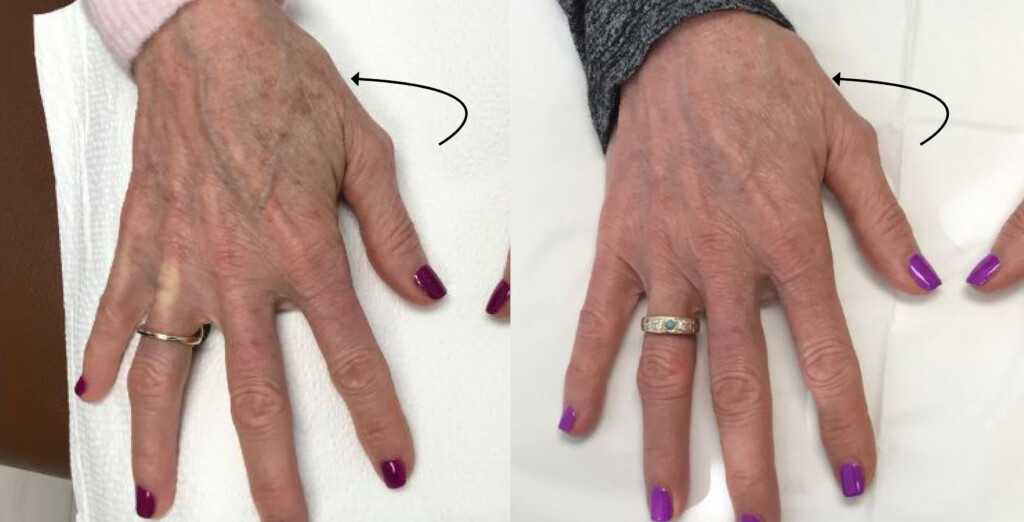
The Q-Switch laser may be used to target select areas of unwanted pigmentation, including certain brown spots caused by sun exposure. The laser delivers focused energy to the pigment, allowing the body to gradually clear the treated area.
However, not every brown spot should automatically be treated with a laser. Pigmentation should be properly evaluated first, especially if a spot is new or has changed. Melasma and other pigment conditions may also require a more cautious approach because heat and inflammation can sometimes make them worse.
VBeam for redness and visible blood vessels
If redness is your primary concern, VBeam may be recommended. This laser targets vascular concerns such as visible facial blood vessels, persistent redness, and certain red marks left behind after acne.
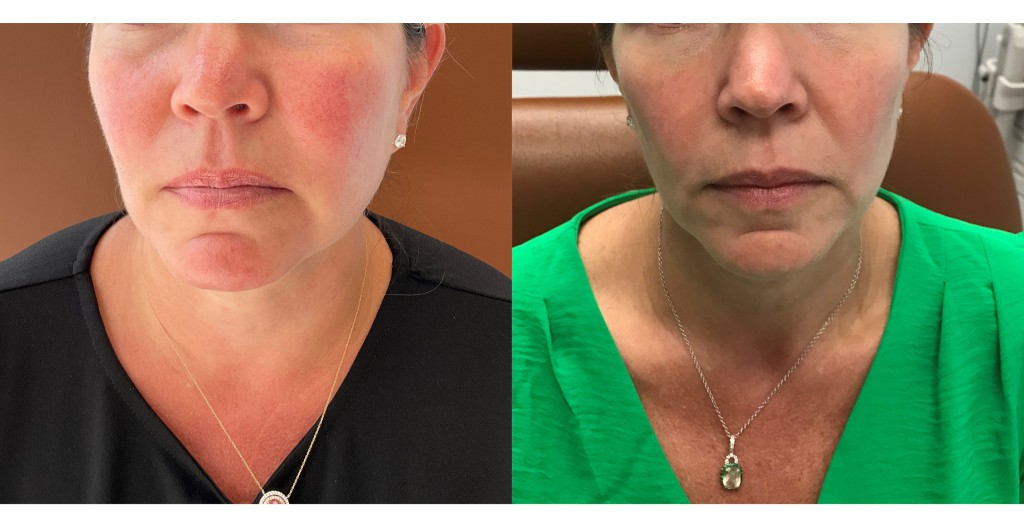
VBeam is different from treatments that primarily target brown pigmentation or resurface the skin. Identifying whether the discoloration is red, brown, or a combination of both helps us choose the correct technology.
IPL Photofacial for widespread discoloration
IPL Photofacial may be considered when sun damage, redness, and uneven pigmentation are spread across a larger area of the face, neck, or chest. Although it is commonly grouped with laser treatments, IPL uses intense pulsed light rather than a traditional laser wavelength.
It can be a helpful option for patients with multiple visible signs of sun exposure, but proper patient selection remains important. Your skin tone, recent tanning, and type of pigmentation all need to be considered before treatment.
Clear + Brilliant for a gentle skin refresh
Clear + Brilliant is a gentler resurfacing treatment designed to improve uneven tone, texture, and early signs of sun damage. It can also help create a smoother, more radiant-looking complexion with less downtime than more intensive resurfacing treatments.
This option may be appropriate for patients who are beginning to notice changes in their skin or who want to maintain the results of previous treatments. A series is recommended for the best outcome.
Fraxel for tone, texture, and sun damage
Fraxel creates microscopic treatment zones in the skin to encourage renewal and collagen production. It may be used to improve sun damage, uneven pigmentation, fine lines, rough texture, and certain acne scars.
Fraxel is more involved than a gentle laser facial and typically requires several days of visible recovery. Improvement develops progressively as the skin heals and produces new collagen. Some patients benefit from a series rather than a single treatment.
Fractional CO2 laser for deeper resurfacing
Fractional CO2 is a more intensive resurfacing option for patients with deeper lines, more advanced textural changes, or certain scars. Because it works more deeply, it also requires more preparation and downtime.
Why a consultation should come before choosing a laser
Two patients may both describe their concern as “sun damage,” while one primarily has brown pigmentation and the other has redness, texture changes, or a combination of concerns. Treating them with the same device would not necessarily produce the best result.
During a consultation, the Simply Dermatology team considers:
- Your primary skin concerns
- Your skin tone and sensitivity
- The type and depth of pigmentation
- Recent sun exposure or tanning
- Your medical and treatment history
- Products and medications you currently use
- Your desired results
- How much downtime you can realistically accommodate
This physician-led approach allows us to create a treatment plan based on your skin rather than applying the same protocol to every patient.
Sometimes the best plan includes more than one treatment
Sun damage is only one part of how the face changes over time. Pigmentation, redness, texture, skin laxity, and volume loss are different concerns, and one treatment cannot correct all of them.
For example, a patient may benefit from one treatment for brown spots and another for redness. Someone concerned about both surface damage and skin laxity may need resurfacing along with a collagen-stimulating treatment such as Ultherapy Prime or Micro RF. Injectables may be considered separately when volume loss or facial balance is also part of the concern.
This is what we mean by a layered approach. Treatments are selected and timed according to what each area of the face actually needs. They may be performed over several months rather than all at once, allowing the results to develop gradually and naturally.
Planning laser treatments before a special event
If you are preparing for the holidays, a wedding, or another important event, it is best to begin the conversation early. Some treatments require several sessions, while others involve visible redness, swelling, peeling, or temporary darkening of treated spots.
Collagen remodeling also takes time. Even after the surface of the skin has healed, improvement may continue to develop over the following weeks or months.
There is no universal timeline that applies to every laser. Starting with a consultation gives your provider enough time to recommend an appropriate treatment and create a schedule that accounts for healing, follow-up appointments, and your event date.
Do you still need sunscreen during the fall?
Yes. Cooler temperatures and shorter days do not eliminate ultraviolet exposure. Daily broad-spectrum sunscreen remains essential throughout the fall and winter, particularly when you are preparing for or recovering from a laser treatment.
Your provider may also recommend temporarily pausing exfoliating acids or other active skincare ingredients. Gentle cleansing, hydration, and protection of the skin barrier may be especially important during recovery. Because aftercare varies by treatment, follow the instructions created specifically for your skin rather than relying on a general post-laser routine.
Begin with the right treatment plan for Lasers
Laser treatments in the fall can help address the brown spots, redness, uneven tone, and texture that become more noticeable after summer. But successful laser treatment begins with identifying what you are actually seeing and choosing the technology that is best suited to treat it.
At Simply Dermatology, our team evaluates your skin as a whole and develops a personalized plan designed to create balanced, natural-looking improvement.
To schedule a cosmetic consultation at our Melville office, call 631-377-7241.
Other blogs you might like to check out: Prejuvenation: Why younger people are turning towards Filler and Botox and a Guide to Laser Treatments in the Winter
-Dr. Papantoniou